Hiển thị các bài đăng có nhãn animal. Hiển thị tất cả bài đăng

Thứ Năm, 8 tháng 12, 2016

Awesome facts for kids about Dove

I have a keen interested on and just want to share this amazing information about to all of you: Awesome facts for kids about Dove

#1

Dove can get easily adjusted in almost every kind of environment. So, we can find they everywhere except the truly harsh areas, like desert and Antarctica. How much do you know about tiger facts for kids ?


#2

Like all birds, Mourning Doves are unable to sweat, so to stay cool during hot weather. They pant just like a dog. Panting requires the doves to drink a great deal of water due the excessive loss of moisture to evaporation.

#3 

Mourning Doves produce a mournful cooing sound which is probably responsible for its memorable common name.

#4 

The names Pigeon and Dove are often used interchangeably. That might be one of the most awesome animal facts you had no idea before. In fact, in many languages, these terms are translated exactly the same. Pigeons and Doves belong to the same family, Columbidae, and have many similar features.

#5 

In Christianity, the dove is a common Christian symbol to embody the Holy Spirit. The Christian symbol of a dove with an olive branch in its beak represents peace.

#6


As with most birds, doves will primarily feed on seeds, nuts and fruits. Interesting, the species can actually be divided in terms of doves that primarily feast on seeds (granivorous) and the other family of dove, the frugivorous species, where fruit is the primary source of nutrition.

#7

Doves and Pigeons have no gall bladder. Although the reason behind this anomaly in unknown, interestingly, these birds still produce bile.

#8 

Both the male and the female produce milk for their young. Their milk is called crop milk. It contains a higher level of protein and fat than the milk produced by mammals.

#9 

Life span of dove in the wild is 1.5 years for adults. However, doves lifespan in captivity can exceed 20 years. Check out my list of fun, weird and just plain amazing fact of life I have found.

#10

When they lay eggs, it is usually just two. Incubation takes just two weeks.

Chủ Nhật, 20 tháng 11, 2016

Would pigs eat a human being?

Would pigs eat a human being? Have you ever wondered about this? Let’s see to find out all what you want to know about animals facts via the article here

Pigs cannot digest human or animal teeth. Human bones can be digested by a pig if they have broken into small enough pieces after being chewed, from everyamazingfactsoflife.


Pigs have a similar digestive system to human beings. They eat both plants and animals to survive in the wild. All food eaten must be chewed extensively for a pig to properly digest it. Berries have the best nutritional content to keep a pig healthy. Domesticated pigs are descendants of the wild boar family that originated in Asia and Europe. Some species of pig have large front teeth and large tusks which they use for self defense and digging roots out of the ground. That might be one of the most awesome interesting facts ever.

Chủ Nhật, 4 tháng 9, 2016

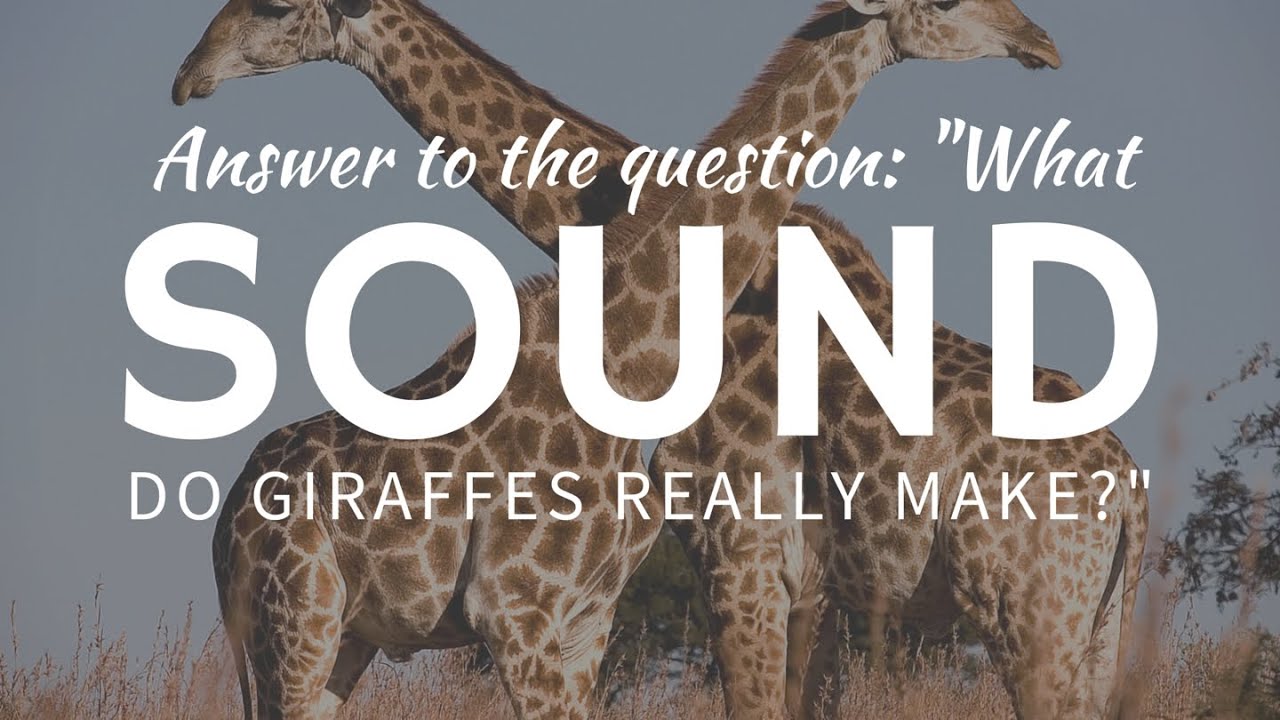
Giraffes only make sound at night

Do giraffes make sound? The answer lies in this writing. Let's see to discover the best answer for this amazing question


Image result for What noise does a giraffe make?

It’s long been assumed that unlike other animals, giraffe, even giraffe baby are largely silent beasts. They don’t oink, moo or roar. But new research suggests perhaps giraffes do have a distinct sound: They hum.

It was previously believed that giraffes may make sounds that are impossible for humans to hear, similar to elephants, but the new research suggests otherwise. In a new study published in the journal BioMed Central, researchers recorded over 940 hours of sounds from giraffes at three zoos over an eight-year period. Beyond the occasional snort or grunt, the researchers recorded humming sounds that the giraffes made only at night. The humming was 92Hz in frequency, Wired reports, which is still audible to humans but pretty low.

Though more research is needed (even though the researchers called making the recordings “consuming, tedious and very challenging”) it’s possible that the giraffes are using these noises to communicate with one another.

“These results show that giraffes do produce vocalizations, which, based on their acoustic structure, might have the potential to function as communicative signals to convey information about the physical and motivational attributes of the caller,” the researchers conclude.

For more interesting information: single malt whiskey

Thứ Hai, 29 tháng 8, 2016

Do elephants run?

So without further ado, here is elephants for kids answer may interest you for the question: Can elephants run?

Image result for elephant can run

A charging elephant might not look like it's merely walking, but that's exactly what it may be doing. Surprisingly, scientists don't agree on whether elephants run in the traditional sense. Now a new study splits the difference, suggesting that a rushing elephant may be walking and running at the same time.

Elephants break all the rules of animal movement. Most four-legged vertebrates change their stride when they move at high speeds so that all four feet leave the ground at once. Elephants take faster and longer steps, but they never take all four feet off the ground. That helps them spread out their massive weight as much as possible, says Norman Heglund, a biomechanics expert at the Catholic University of Louvain in Belgium. But then, are they really running?

That's been a tough question to answer. It turns out there's a lot more involved in running than just taking one's feet off the ground. The legs also flex in particular ways that change an animal's center of gravity and the force it exerts on the ground. Scientists can measure these changes in humans and other animals by making them walk across force sensing plates. But just try doing that with a 4000-kilogram elephant.

The closest researchers have come is high-speed video of rushing elephants analyzed by a team of researchers in 2003. John Hutchinson, a biologist of the University of London's Royal Veterinary College, and colleagues concluded from the footage that, when elephants move at high speeds, their back legs bend slightly, like a runner springing from step to step. But scientists wanted to see more quantitative data.

So in the new study, Heglund and colleagues engineered a heavy-duty force-sensing plate that could withstand being trampled by a charging elephant. They shipped sixteen of the plates, along with computers and video cameras to the Thai Elephant Conservation Center in Lampang Province. There, they constructed a 2 meter by 8 meter track from the plates and filmed 34 elephants, each guided by a mounted trainer, as they traversed the track at a range of speeds.

Despite their size, elephants step lightly, the team reports today in The Journal of Experimental Biology. A human runner exerts peak forces of 3 times his or her body weight when running, while elephants exert at most 1.4 times their body weight. They also don't move their center of gravity much: Even at an 18 kilometer-per-hour charge, an elephant's center of mass moves up and down by about a centimeter, a smaller vertical movement than human runners make.
For more facts: tiger facts for kids

Image result for elephant can run

As to whether elephants actually run, the answer seems to be, well, sort of. While Hutchinson's team saw that an elephants' front legs walked while the back legs trotted, Heglund's team's measurements indicated the opposite: When stepping with a forelimb, the elephants' center of mass lowered slightly as the force on the ground increased, indicating a spring-like mechanism typical of a dog or a human's run. Meanwhile, even at high speeds, the elephants' back legs seemed to stay rigid, which is typical of a walk. "They don't really run in the classical sense," Heglund says. "They can't quite kick it into second gear, so they're stuck halfway in between" a walk and a run.

But that may not be the final answer, warns Hutchinson, who studied the same group of elephants alongside Heglund's team. He says that the elephants' feet likely touched more than one plate at once, making it hard to separate what individual limbs were doing. Still, he says, the research is important because it quantifies the forces with which elephants hit the ground. "It's nice to have the numbers."

If nothing else, the study illustrates that, when it comes to running in animals, "it's not one size fits all," says Daniel Schmitt, an expert in primate locomotion at Duke University in Durham, North Carolina. "That speaks to how evolution works."

Read more: animal fun facts

Thứ Năm, 25 tháng 8, 2016

What are similarities between humans and animals in genetic?

Enjoy our wide range of science facts and it’s the time for similarities between humans and animals in genetic:

Image result for genome

It is very difficult to find reliable data comparing the human genome to animal genome. The principal reason is that few animals have had their full genome sequenced. Even those that have cannot be easily compared in terms of percentages because the genomic length and chromosomal division can vary greatly from one species to another.

Scouring the Web, here is what I have found so far.

- Genome-wide variation from one human being to another can be up to 0.5% (99.5% similarity)

- Chimpanzees are 96% to 98% similar to humans, depending on how it is calculated.

- Cats have 90% of homologous genes with humans, 82% with dogs, 80% with cows, 79% with chimpanzees, 69% with rats and 67% with mice. 

- Cows (Bos taurus) are 80% genetically similar to humans.
    See more amazing animal facts

- 75% of mouse genes have equivalents in humans (source), 90% of the mouse genome could be lined up with a region on the human genome (source) 99% of mouse genes turn out to have analogues in humans 

- The fruit fly (Drosophila) shares about 60% of its DNA with humans.

- About 60% of chicken genes correspond to a similar human gene.

See more fact of life